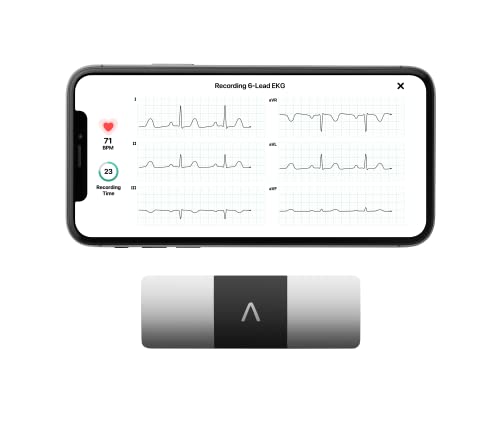

The KardiaMobile 1-Lead Personal EKG Monitor, developed by AliveCor, has become a go-to tool for people who want to take a proactive role in monitoring their heart health. Designed to fit in your pocket and deliver medical-grade electrocardiograms (ECGs or EKGs) in just 30 seconds, this compact device offers users the ability to detect atrial fibrillation (AFib), bradycardia, tachycardia, and normal sinus rhythm from the comfort of their home or anywhere.
In this review, we’ll dive deep into how it works, its features, benefits, drawbacks, common questions, and who it’s best suited for.
📦 What’s in the Box?
When you purchase the KardiaMobile 1-Lead, you get:
-
The KardiaMobile device (a slim, card-sized sensor)
-
Quick start guide
-
Instructions for downloading the Kardia app (available on iOS and Android)
-
Information on optional subscription services
There are no wires, electrodes, or charging cables involved, which adds to the simplicity and portability.
⚙️ How It Works: Setup and Usage
Setting up the KardiaMobile is straightforward and takes only a few minutes:
-
Download the Kardia App: Available on both the App Store and Google Play.
-
Create an Account: You'll need an email address to register.
-
Pair Your Device: The KardiaMobile does not use Bluetooth; instead, it transmits data acoustically through your phone’s microphone, which simplifies pairing.
-
Take a Reading: Place your index and middle fingers from each hand on the two pads for 30 seconds while your phone records the ECG.
The reading appears almost instantly within the app and is stored in your history. The app labels the reading (e.g., "Possible AFib" or "Normal") and provides a waveform that can be shared with healthcare providers.
✅ Advantages of KardiaMobile 1-Lead
1. Medical-Grade Accuracy at Home
Despite being a single-lead ECG, the KardiaMobile is FDA-cleared and clinically validated to detect certain heart arrhythmias with high accuracy. It's trusted by physicians and often recommended for patients with known irregular heart rhythms or those who experience unexplained palpitations.
2. Extremely Portable and Discreet
The device is the size of a credit card—small enough to fit in a wallet or pocket. This portability means users can record heart rhythms anywhere, whether at home, at work, or while traveling.
3. Instant Results
The device delivers an ECG reading within 30 seconds, helping users determine whether they need to take further action. This immediacy is crucial for those who need reassurance during an episode or want to capture data in real-time.
4. No Electrodes or Wires
Unlike traditional ECG machines, KardiaMobile doesn’t require chest patches, wires, or gel. You simply rest your fingers on the sensors. This means it's comfortable and quick to use.
5. Shareable Reports
You can easily export PDF reports from the app and share them with your doctor via email or through a connected health portal. This feature enables better-informed consultations, especially for those managing ongoing conditions like AFib.
6. Works with Most Smartphones
KardiaMobile supports a wide range of Android and iOS devices. Because it doesn’t use Bluetooth, you don't have to worry about pairing issues or battery levels.
7. FSA/HSA Eligible
The device qualifies as a medical expense under many Flexible Spending and Health Savings Accounts, which can help offset the cost.
❌ Disadvantages to Consider
1. Limited Diagnostic Scope
As a single-lead device, it cannot detect all heart conditions. It’s primarily focused on rhythm analysis, so issues that require a full 12-lead ECG—such as early signs of a heart attack—won’t be detected.
2. Subscription Required for Advanced Features
The basic device works without a subscription, but to access premium features like:
-
Cloud storage
-
Unlimited ECG history
-
Detailed cardiologist reviews
-
Weight and blood pressure tracking
...you’ll need a KardiaCare subscription, which costs extra (typically around $9.99/month or $99/year).
3. Incompatible with Some Devices
While it works with most smartphones, compatibility issues have been reported with certain Android models or phones using non-standard microphones. It's important to check compatibility before purchasing.
4. Not for Use with Pacemakers or ICDs
Users with pacemakers or implantable defibrillators (ICDs) are advised not to use KardiaMobile, as readings may be inaccurate or misleading.
5. User-Dependent Accuracy
The accuracy depends heavily on user technique. Movement during measurement, poor contact with the sensors, or dry fingers can lead to inconclusive or incorrect readings.
🔍 Frequently Asked Questions (FAQs)
Q: Does KardiaMobile require an internet connection?
No. You don’t need to be online to take an ECG. However, an internet connection is needed to sync with the cloud or send reports to a physician.
Q: How often should I use it?
There’s no set rule. People managing conditions like AFib might use it several times a day, while others may only use it during symptoms or as part of a weekly check-in.
Q: Can I use it for family members?
Yes, though each person should create a separate profile in the app. This helps keep the readings organized and avoids confusion.
Q: Is it covered by insurance?
Typically, it’s not covered by standard insurance plans, but since it’s FSA/HSA eligible, many users can purchase it using pre-tax health funds.
Q: What’s the difference between KardiaMobile 1-Lead and KardiaMobile 6L?
-
1-Lead: Provides a single lead ECG, useful for rhythm analysis and common arrhythmia detection.
-
6L: Records six leads, offering more detailed insights and the ability to detect a wider array of heart issues.
The 6L is better for people needing more in-depth tracking or under a cardiologist’s supervision. However, it’s more expensive and slightly less portable.
🧑⚕️ Who Is It Best Suited For?
The KardiaMobile 1-Lead is ideal for:
-
Individuals diagnosed with AFib or arrhythmias: Those needing regular monitoring between visits.
-
People with unexplained palpitations or dizziness: To capture data during episodes.
-
Seniors or aging adults: Who want to proactively monitor heart health.
-
People at high cardiovascular risk: Due to family history, high blood pressure, or other conditions.
-
Remote patients: Who don’t visit clinics often but want to stay connected with their providers.
📊 KardiaCare Subscription: Is It Worth It?
The optional KardiaCare service expands functionality significantly. Here’s what it includes:
-
Unlimited cloud storage of ECGs
-
Automatic detection for 6 different arrhythmias
-
Monthly summary reports
-
Medication tracking
-
Cardiologist review of EKGs
For users managing a heart condition or those who want peace of mind, it may be worth the added cost. However, for occasional users, the basic free service is often sufficient.
⚖️ Final Verdict: Is KardiaMobile 1-Lead Worth It?
Yes—if you're looking for a convenient, reliable, and fast way to monitor your heart rhythm at home or on the go.
The KardiaMobile 1-Lead stands out for its simplicity, medical-grade quality, and instant feedback. While it doesn’t replace a full cardiology workup, it serves as a powerful tool for ongoing monitoring and reassurance—especially for people dealing with arrhythmias or unexplained heart symptoms.
Pros:
-
Fast, accurate ECGs at home
-
FDA-cleared
-
Portable and discreet
-
App is intuitive and easy to use
-
Shareable reports
Cons:
-
Limited to rhythm detection
-
Subscription required for full features
-
Not suitable for everyone (e.g., pacemaker users)
For many users, this device is not just convenient—it can be life-changing, offering peace of mind and supporting early detection of potential cardiac events.